
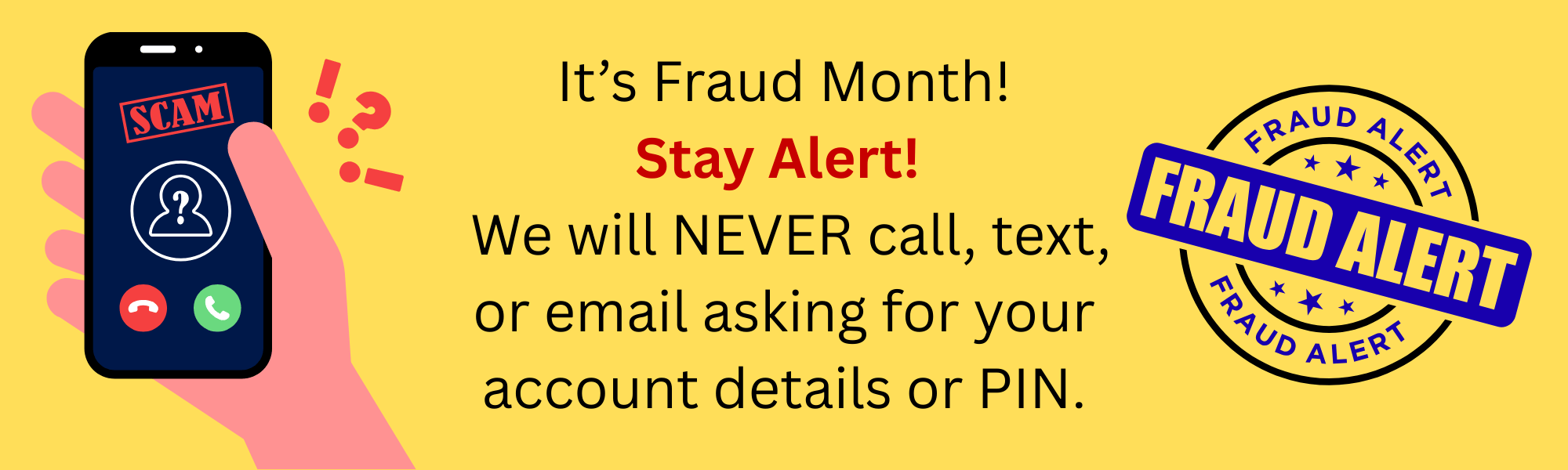
Fraud Alert of the Week
03/23/26 Week 4: Click Bait Scams
Fraudsters are increasingly using click bait tactics to impersonate businesses and trick individuals into clicking on their advertisements. These scams can appear in multiple forms:
- Social media posts advertising a product that is too good to be true.
- Emails offering low-interest loans or debt forgiveness.
- Text messages or emails stating your account will be locked.
- Fake surveys promising gift cards.
The links in these messages often lead to fraudulent websites designed to capture your personal information, banking information, and your debit or credit cards.
If you suspect fraud, contact us immediately at 269-965-1381. Staying cautious is the best defense against fraud. We appreciate your partnership in keeping your account secure.
03/16/2026 Week 3: How to protect yourself from scams
The best defense to avoid fraudsters is to remain skeptic of urgent, unsolicited requests for money or personal information. If you ever feel unsure about a message or offer, take a step back and verify before taking any action. A few extra minutes of caution may help prevent the scammer from getting your information.
Stop and think about the following:
- Are they offering you a prize?
- Some popular scams will say you have won the lottery, a trip, or another large dollar ticket item, but you must enter your card information.
- Are they requesting payment or a response immediately?
- You do not need to decide now. Most legitimate business offers or businesses will give you time to think it over.
- Did they request access to your computer?
- Tech support scammers may try to lure you with a pop-up window that appears on your computer. If you call the phone number on the pop-up alert, they will try to gain access to your computer and they have access to everything saved on your device.
- Are you being asked to click on an attachment or link?
- Opening or downloading files from text and emails can be extremely dangerous, even if it is from someone you know. Scammers can disguise themselves as an everyday company or organization that you use often, such as your financial institution, PayPal, delivery companies, or even online stores like Amazon.
- Is the ad too good to be true?
- Scammers create or hijack social media pages to advertise branded goods at heavily reduced prices. These sites typically disappear or change after the payment has been made.
Always remember if something seems suspicious, please contact us immediately. Prompt reporting allows us to investigate quickly and take the necessary steps to protect you and prevent further issues.
03/09/2026 Week 2: Impersonation Scams
We are seeing a large amount of fraud attempts involving people impersonating legitimate businesses. This includes financial institutions, utility companies, delivery services and government agencies. These scams commonly occur through phone calls, text messages, emails, or social media. Typically, they will claim there is an urgent problem that has to be dealt with right now. They may also demand immediate payment to avoid penalties and service interruption or will ask for personal information, banking information, or card information.
Legitimate businesses will not pressure you to act immediately or threaten arrest/account closure. Always verify requests by contacting the company directly using a trusted phone number or official website.
Please remember we will never ask you for:
- Card number
- PIN
- Security code
- Online banking information
- Passwords
- Security Questions
Your vigilance is one of the strongest defenses against fraud. Thank you for helping keep your accounts secure.
03/02/2026 Week 1: Protect your Data!
With everything going on in the world, protecting your financial and personal information is more important than ever. Grand Trunk (BC) EFCU prides itself on keeping your information as safe as possible, but we need your help. Here are some ways to keep your information safe.
- Safely store/dispose confidential or sensitive documents
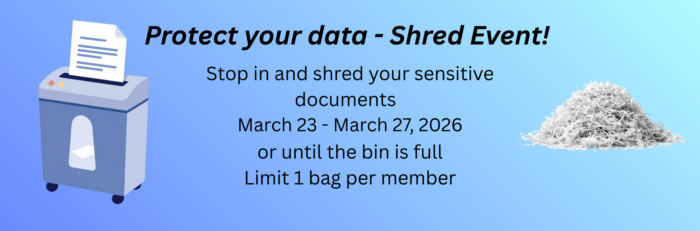
- Stop in and shred your documents at no cost between March 23-27 or until the bin is full. We will safely dispose of all your documents. 1 bag per member.
- Use strong passwords
- Make sure all your passwords are long, complex and different for each account. Try to avoid using information that can be easily guessed i.e. birthdays, names, pet names, or family members.
- Review privacy settings
- Make sure when you download new apps you are reviewing the privacy settings and what information you are sharing. Limit the amount of personal information you share publicly and monitor your app permissions.
Categorized in: Fraud Alerts, News